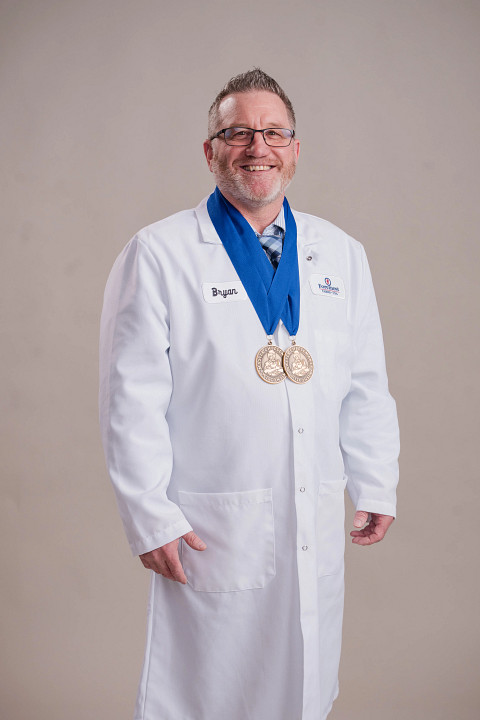
Meet Bryan Allen Production Manager & Master Cheesemaker
Bryan Allen has spent more than a decade shaping the quality, consistency, and craftsmanship of the cheese produced at Foremost Farms’ Clayton facility. Today, he is not only a Production Manager, he is also a newly certified Master Cheesemaker in Mozzarella and Provolone, one of the most prestigious distinctions in the dairy industry.
Please describe some highlights of your role within Foremost Farms:
The highlights of my role at Foremost Farms come from the day-to-day work. I enjoy solving process issues, improving product functionality and helping create consistency across operations. I make it a priority to understand all aspects of the process, from product planning and ingredients to milk supply, (make process) recipe management, finished goods, by-products, customer satisfaction and financial accountability. I also take pride in supporting others by sharing knowledge and making their work easier and more efficient.
Looking back over the past 10 years, seeing how far the Clayton facility has come is a major highlight. Achieving Safety Plant of the Year (2021), Quality Plant of the Year (2022), and Plant of the Year (2023) is something I’m proud to have contributed to. I’ve also built strong relationships across the cooperative and enjoyed working on product development and improvements for our customers.
Earning my Master Cheesemaker credentials in Mozzarella and Provolone was another significant milestone. My time at the Appleton facility during that process helped me connect more deeply with the broader organization and exchange ideas between plants. Finally, supporting the Cheesemaker Operators in Clayton as they earned their licenses has been especially meaningful. Their dedication and growth are a big part of our success.
What is your favorite thing about working at Foremost Farms?
My favorite thing about working at Foremost Farms is that it brought me back to my roots. I grew up helping my family’s small dairy farm and never expected to return to the dairy industry after exploring other careers like landscaping, trucking and construction. But once I came back, I realized how much I truly enjoyed it and wondered why I hadn’t considered it sooner.
After 10 years at a cheese plant, I chose Foremost Farms because the business structure felt right for me. Once I joined and saw that Foremost Farms is one of Wisconsin’s top cheese producers with a butter facility as well, I knew I had made the right move. Being part of this cooperative makes me feel like I’m contributing to something meaningful simply by doing a job I love.
Working here brings back the values and purpose I felt on the family farm. It gives those hard days from my childhood a new sense of importance, and it reminds me why this work matters. That connection to my past, to the industry and to the people we serve is my favorite part of being at Foremost Farms.
What inspired you to pursue the Master Cheesemaker program?
I was first introduced to the idea of becoming a Master Cheesemaker while working at F&A Dairy. They asked if I wanted to pursue the program, so I obtained my Cheesemaker License. At the time, I didn’t fully understand what the Master program involved, but I was interested. They began referring to me as their “Master Cheesemaker,” and once I researched the program, I realized how intense and meaningful the certification truly was. It actually made me uncomfortable being introduced that way, because I knew I hadn’t earned the title yet. I even remember a USDA inspector congratulating me on the accomplishment, and I had to explain that I was only a Licensed Cheesemaker.
At that point, I didn’t think the opportunity to pursue the Master program would ever come my way. Then I joined Foremost Farms after 10 years of making Mozzarella and Provolone, and a couple of years into my time here, Scott Navarre, our Product Manager and a Master Cheesemaker of 10 years, asked if I would consider entering the program. I was honestly amazed that the opportunity had presented itself again. I knew I couldn’t let it pass by.
I was nervous about the commitment, but I also saw it as a chance to deepen my knowledge, strengthen my craftsmanship and grow in a field I truly care about. That combination of challenge, opportunity and personal pride is what inspired me to pursue the Master Cheesemaker program.
What was the most challenging part the Master Cheesemaker program?
The most challenging part of the Master Cheesemaker program was the commitment. I tend to take on a lot of responsibilities, and I struggle with letting things go, so balancing the program with my day-to-day work was difficult at times. I often felt like I was falling short in multiple areas even with the program itself.
The final exam was by far the toughest aspect, as it should be. It took me well over a full week to complete, and it pushed me in every way. But the difficulty is what makes the program meaningful. The challenge is part of the value, and it makes the accomplishment feel even greater.
How has becoming a Master Cheesemaker changed the way you approach your work?
Becoming a Master Cheesemaker has strengthened the way I approach my work. The program intensified my drive to solve problems, improve processes and look at the entire operation with more balance and perspective. It pushed me to think not only about making the best cheese possible with the tools I have, but also about how our products meet the needs of our customers.
I’ve learned to consider both craftsmanship and customer expectations. While I never want to compromise on key quality characteristics like flavor, texture, and appearance, I now better understand how certain adjustments may affect our customers’ applications. The program helped me see the importance of evaluating every decision from multiple angles and finding the best way to incorporate both quality and customer needs into the final product.
How do you see the cheesemaking craft evolving in the next few years?
Wisconsin is the hub of the cheese market, producing roughly 25% of all cheese in the United States which is a number that continues to grow. I don’t see that changing and I hope it never does. That strong tradition is part of what makes being involved in the Master Cheesemaker Program so meaningful. Wisconsin’s cheesemaking heritage runs deep and I believe there will always be a strong demand for traditional cheese varieties.
At the same time, I see the craft evolving. In both varieties I earned my Master certification in, the market is shifting toward more Americanized, milder styles and toward customized variations designed to meet specific customer and consumer needs. I think we’ll continue to see a balance between honoring tradition and adapting products to fit modern applications and preferences.
What advice would you give someone interested in pursuing the Master Cheesemaker path?
My advice is simple: pursue the Master Cheesemaker path for yourself. The program is a long and demanding commitment, but the personal and professional benefits are worth it. Don’t let the intensity of the process discourage you. If your motivation comes from within, you’ll see every challenge as an opportunity to grow in a craft you already love.
Approaching the program with the right mindset helps you recognize moments of learning and development along the way. By the time you reach the end, you’ll have built the perspective and discipline of a true Master Cheesemaker which is someone driven by understanding, continuous improvement and problem solving.
In the end, the program doesn’t just benefit you. It strengthens your contribution to your company, supports the people you work with and mentor, and even impacts your family and friends. But it all starts with doing it for yourself.
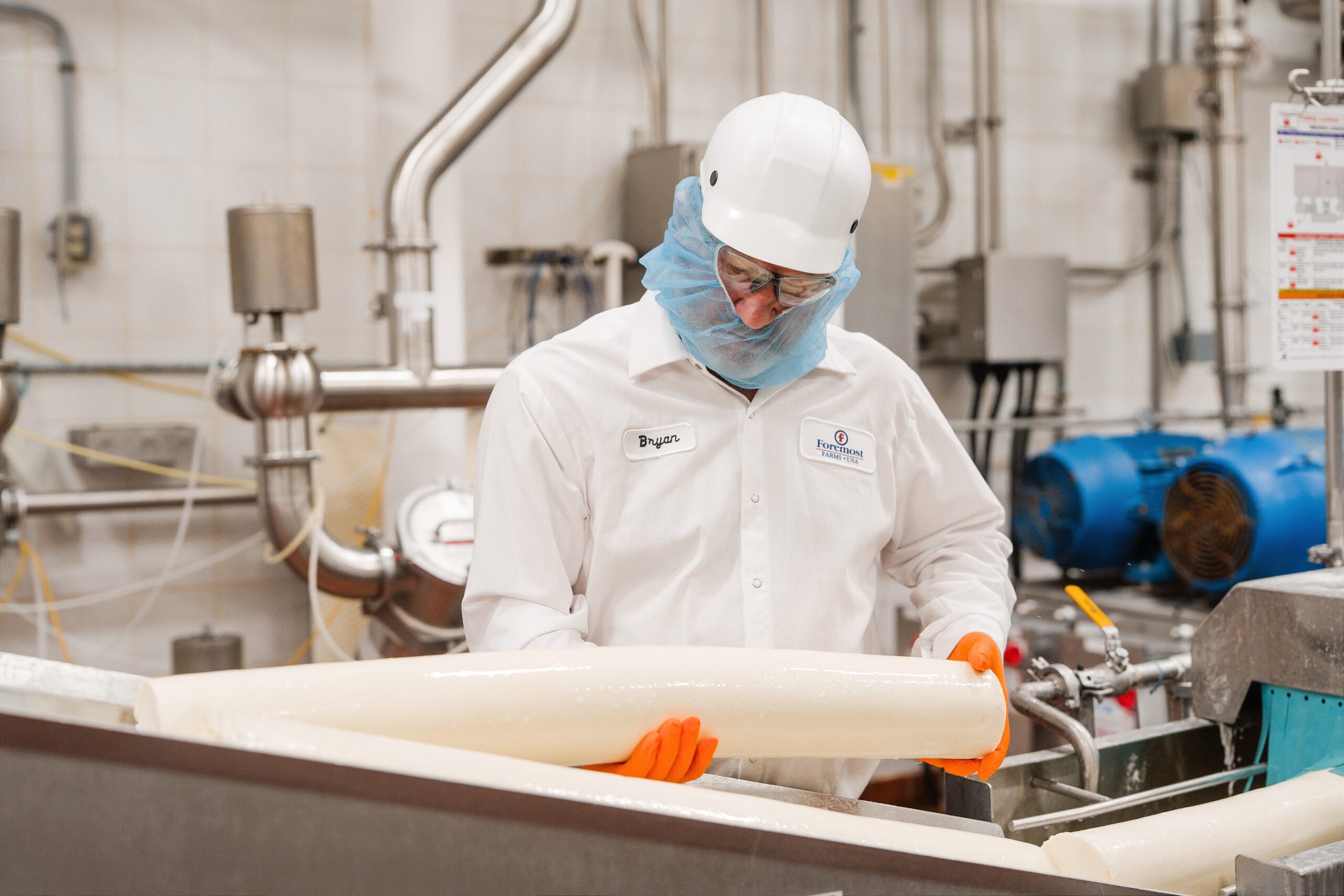
Bryan Allen inspecting provolone log at Clayton plant.
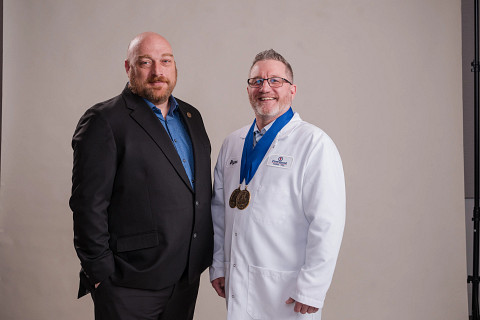
(L-R): Scott Navarre and Bryan Allen