By: Amy Kyllo | Dairy Star
LANESBORO, Minn. – When Foremost Farms USA, which was looking for milk, asked Ben Rein to start dairy farming again early last year, he was ready to say yes. The Reins had originally sold their herd in March 2024 after receiving poor prices from a different processor.
“I really couldn’t stand looking at my dairy operation sitting empty,” Rein said. “When I got the opportunity, I wanted to fill it up.”
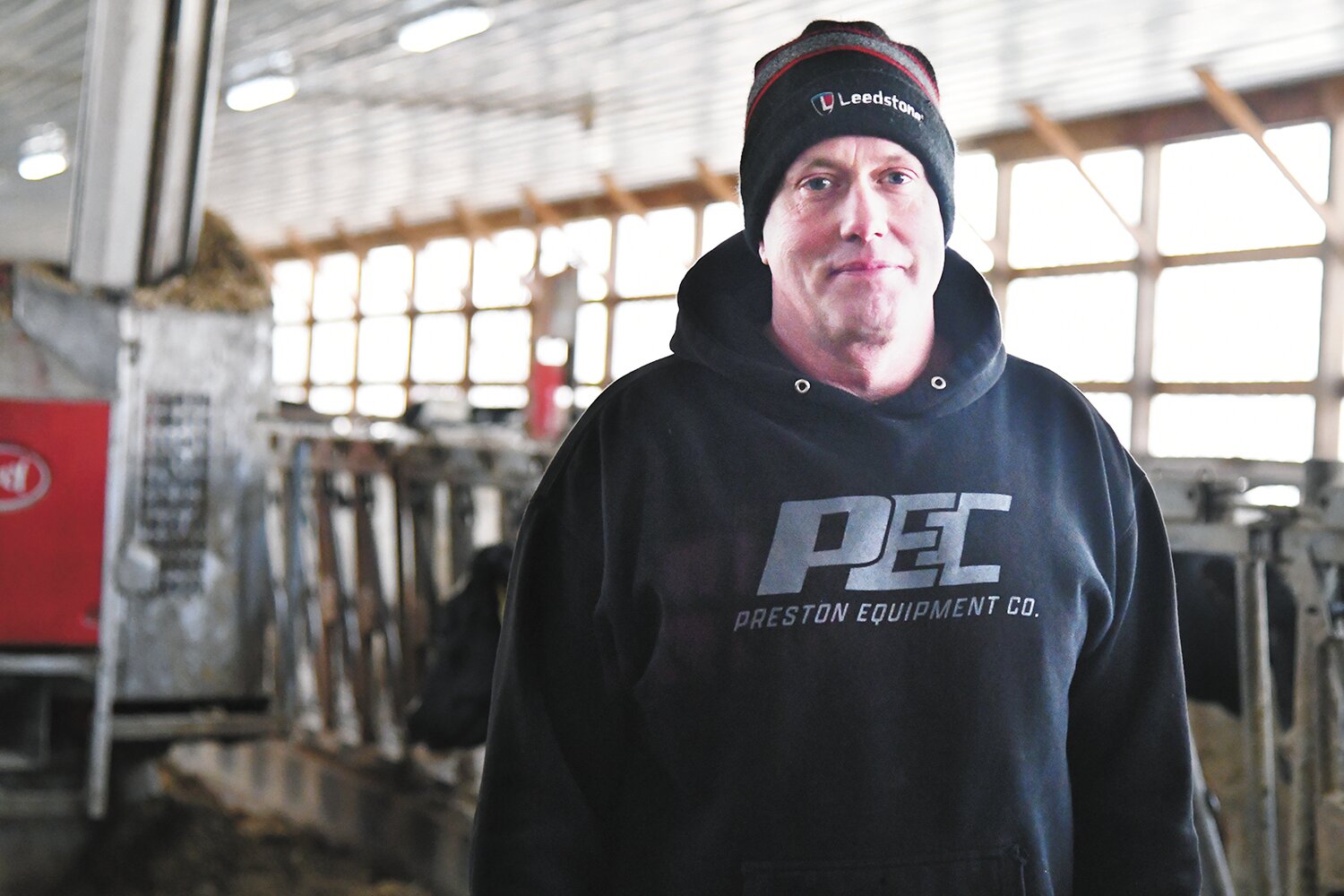
Rein, his wife, Amber, and their family live on their diversified crops, beef and dairy farm near Lanesboro. Their herd is milked by two robotic milking units and is fed by a completely automated robotic total mixed ration system.
The family started milking again in April 2025 and is now up to 100 cows.
“I really missed the cows and the challenge of trying to produce good, high-quality milk and good genetics,” Rein said. “I like that you grow your own feed and feed it to the cows (to) produce milk and I can produce beef crosses for meat production. Then I can use manure for fertilizer on my farm.”
The original decision to quit milking came after the Reins tried switching processors for three or four years to get a better price. In 2023 Rein received an extremely low milk price for his milk after trucking had been deducted for four months in a row.
“The price had gone down so much with the creamery I was with,” Rein said. “None of the other creameries were accepting any new patrons. … It was so far below the cost of production. … The robots were paid for, so we decided to sell the cows.”
Rein refocused his farm, leaning into the crops and custom work, and filling as much of the barns as he could with feeder cattle and beef-dairy crossbred calves.
“I like doing custom work, … but I like being on my farm working with animals more,” Rein said. “We still had a lot of feeder cattle, but the dairy building facility was empty.”
The timing of returning to dairy Rein said coincided with increased purchase prices for beef-on-dairy crossbred calves that were getting too high to be profitable.
When he had sold his herd, which went to a new robotic dairy in Nebraska, Rein said he had not expected to get back into dairy because he did not think he could find a processor.
Rein restarted his dairy herd with 30 cows purchased from another robotic dairy near Houston. After his initial startup, he added 10 heifers to the herd every 2-3 weeks so he would not get overwhelmed with training.
Rein got his start in robotic milking in 2013, so he knew how to train heifers. Rein said he prioritized buying mid-sized, tame, good-tempered animals.
“I’ve noticed that they are more efficient with feed and milk,” Rein said. “I tried to buy good genetics from good dairies in the area.”
Rein is a first-generation dairy farmer. He grew up on a beef and farrow-to-finish hog operation. In 2007, he started dairy farming, milking in a swing-6 parlor. He said he was inspired to dairy in part through his custom work clients.
“I just always liked going to dairy farms and talking to dairy farmers,” he said.
His current dairy setup includes a freestall housing with a customized Lely Vector feed system.
Rein’s robotic feed system, which was installed in 2018, does not use a feed kitchen. The system is connected directly to his three Harvestore silos, his commodity bins and a component box. The only labor Rein has to do is add straw once a week to the component box.
“As long as the Harvestores are full, it mixes feed 24 hours a day, and checks feed, (and) pushes up feed” Rein said.
Rein said he considered a feed kitchen, but decided this style of system was not automated enough to be a major labor savings.
Watching videos of other farms that also used silos with the Vector system inspired Rein to design this setup.
“This is the only way I could figure out that you can completely automate it,” Rein said.
The robotic mixer has about 500 feet it covers in the feed alleys, all of which are enclosed. The maximum capacity Rein said he thinks he could feed with his system is about 250 milk cows and 300 steers.
Another core part of management, Rein said, is his mattress foot baths, which have virtually eliminated foot problems. This has led to increased visits to the robots. Initially he was getting 2.5-2.6 turns per cow and is now at 2.8-3 turns.
“If they get lame, they don’t want to come to the robot,” Rein said. “(But) if they come to the robot more, they milk more.”
Rein said that with his farm set up, one person could oversee the milking and care of about 240 cows by themselves if necessary. Rein does have help, though. One part-time employee helps with evening chores so that someone outside of the family is trained on the robots. His high school-aged daughter, Rachel, helps on evenings and weekends. Amber, who also works full time off the farm, is in charge of calves, which are fed with two automated calf feeders. Rein’s dad, Steve, who is 78, helps with crops and manure. In the summers, his daughter, Jaime, helps with their drone spraying business.
As he looks to the future of his dairy, Rein said he hopes to buy 20 more heifers and get them adjusted to the robot. Once his herd numbers are up enough, he plans to start breeding the lower half of his herd to beef.
“I like the routine (of dairy farming),” Rein said. “If you put the feed up well and keep improving your genetics, you can see the results almost every day you come out.”