
For Larry and Sharon Wiste, farming their land near Spring Grove, Minn. is more than a job, it is a rhythm of life. It starts in the kitchen on a Monday morning, where they can be found sitting down after milking to a breakfast with homemade bread made with flour they ground themselves, fresh pressed apple juice they made with their family, fried scrambled eggs fresh from their flock and goat milk Sharon harvested by hand.
Outside, their herd of 26 dairy cows are grazing or resting on their hilly pasture, and bright-eyed calves are content after consuming their three quarts of fresh, unpasteurized milk. The Wistes farm side by side, something they have done since 1983. Occasionally they will receive help from their children or grandchildren, but day-to-day work falls on the couple.
“(We) learn something different every year,” Sharon said.
Larry agreed in a cheerfully joking manner. “I imagine by the time we quit we’ll know it all,” he said.
By mid-morning, milking has been done for a few hours and the Wistes work together to shake out straw in the stalls in readiness for evening milking when the cows will return. The Wistes said they enjoy their life.
“I did go to town one summer and work, and I’d rather just get up in the morning and work right here, be your own boss,” Sharon said. “I know it’s a schedule for milking, morning and night, but you got all that time in between.”
That time “in between” the Wistes stay busy. Sharon has a large garden and preserves most of the fruits and vegetables they eat. “We don’t buy too much,” Sharon said.
Larry has a custom fencing business. He works with about 15 clients to help with fence maintenance and other fencing needs. Much of his work happens in the spring. Larry said he enjoys walking the hills and bluffs, so maintaining hilly pastures is a favorite. Most of the fences he works on are barbed wire.
Another side hustle Larry did for 30 years — which he has now turned over to his son-in-law — is grave digging. He estimates that he has dug well over 1,000 graves by hand with a spade. Larry worked with 12-15 cemeteries.
The Wistes raised three children on their farm who are now grown and help and visit as they are able. Though the Wistes no longer have a full house, it does not mean they plan on having an empty barn. “Since the kids grew up and left, the cows seem like more family now than anything,” Larry said.
Larry said the stanchion-style barn makes it easier to befriend the cows. Sharon said her calves are like pets to her and that the majority of their herd is very friendly. “You could go out in the pasture, they all come up by you, (acting like) pet me, pet me,” Sharon said.
They calve seasonally, which Larry said has been one of their best decisions, with the herd calving throughout the fall. “I like winter milking,” Larry said. “My hands are pretty well shot.”
A preference for winter is why the Wistes chose their calving window. “Then they’re milking really well in the winter and then they can be comfortable in the barn,” Sharon said.
They dry up the majority of their herd in July, which gives them a break and helps with burnout. “Summer is our vacation time,” Sharon said. “We milk the cows, they go outside all day, (we) milk them at night, (and) they go back outside. We don’t have so many chores, and the calves and the bred heifers all go down on pasture.”
They never completely dry up the herd, with late fall due dates waiting to be dried up until the early fall due dates freshen. “You have to hold on to having a little bit of milk in the tank,” Sharon said. “(That keeps) the milkman coming.”
The Wistes try to keep the 26 stalls full in their barn that was built in the 1950s. However, they avoid exceeding 26. “It takes as much time to switch that one and keep her bedded up and clean as it does for the 26 in the barn,” Sharon said.
Sharon is in charge of feeding calves. The calves are housed individually and are weaned at around 2 months of age when they are doing well on starter consumption. “I used to try to really be at 7-8 weeks, but it seems like if you go a little longer, they’re healthier,” she said. In the past, the Wistes raised their bull calves as steers and sold them as feeders, but with the high price for calves, Sharon said they have been selling them right away.
The Wistes use A.I. for most of their breeding with a live beef bull used for cleanup. Their barn is colorful. They have Holstein, Swedish Red, Norwegian Red and Jersey bloodlines scattered throughout the herd.
The farm is about 40 acres. This year all their land is devoted to hay or pasture. They rented 10 acres to grow corn for silage and their dry corn is purchased. Their cows are component fed.
The Wistes put up most of their hay into dry hay, both large squares as well as filling their mow with small squares. This year, they added baleage that their son-in-law put up for them. They purchase straw for bedding.
As they have gotten older, the Wistes have cut back on side hustles to semi-retire. Looking to the future, Larry would like to do more fishing and Sharon would like to spend more time preparing for and interacting with their children and grandchildren.
For farm goals, Sharon said they want to downsize the number of heifers kept. “My goal is to have less animals around, milk the barn full, but just have less young stock,” she said.
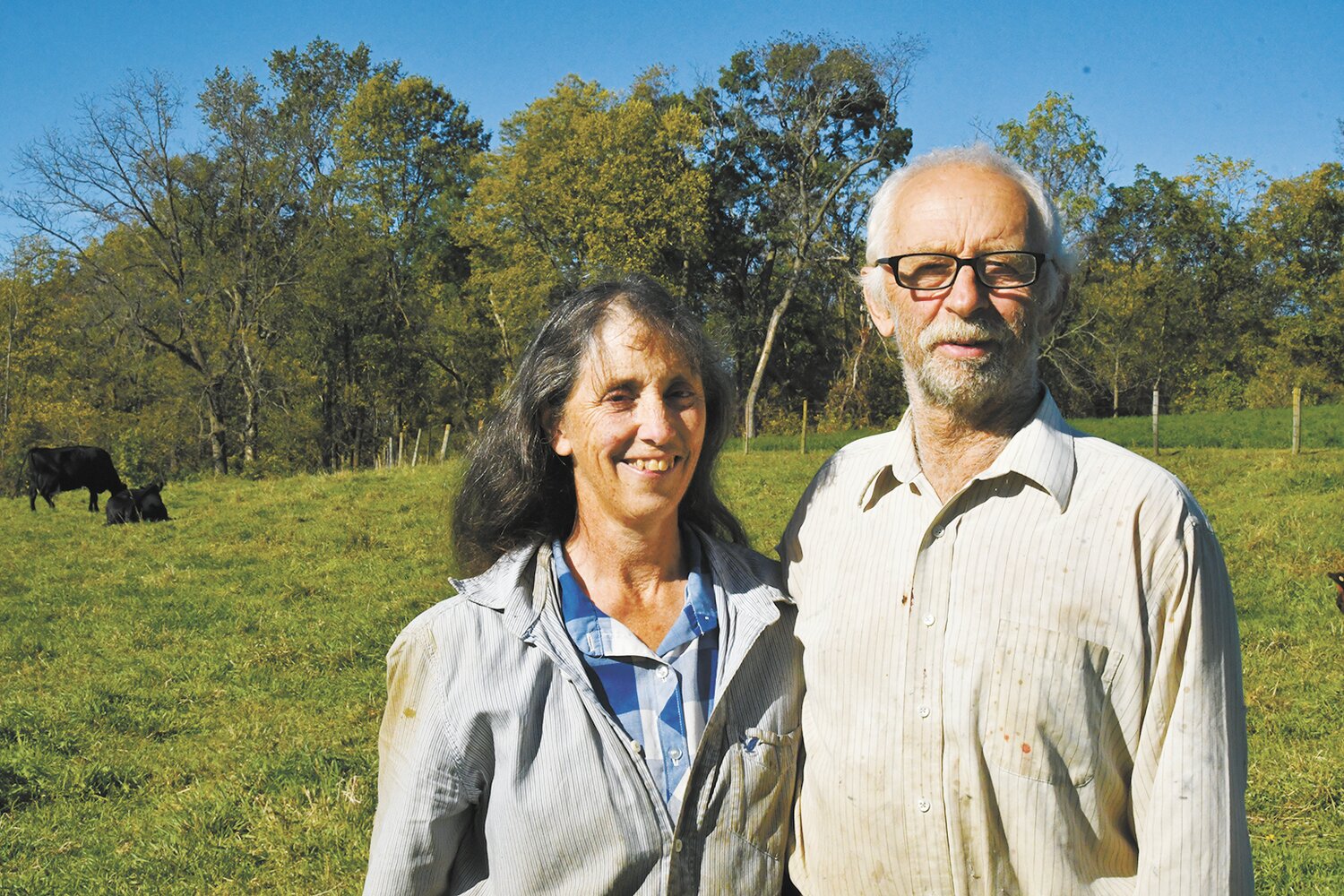
Photo credit: Amy Kyllo/Dairy Star